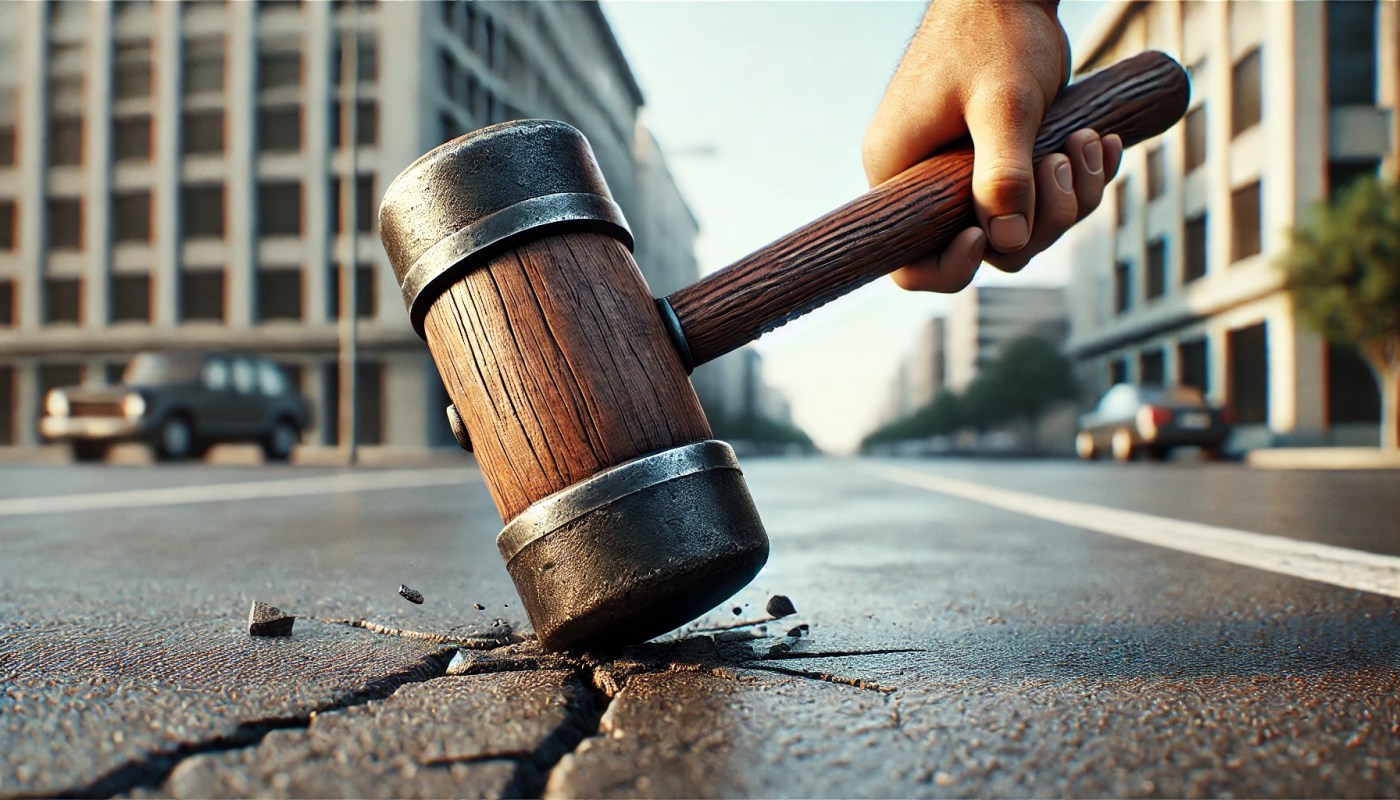
Here’s the scenario. You’re at the bar, watching the Cubs play. Your friend arrives late. You ask what took so long. He says he couldn’t find an Uber, so he pounded the pavement instead.
What?
What does that even mean? Is your friend beating the concrete with a mallet?
This is what goes through a viewer’s head when you use unnatural phrases or clichés. They’re pulled out of the moment to ponder the sequence of words you jammed into the story because you already used the word walk once and didn’t want to use it again. Guess what? Viewers won’t notice if your anchor says walk a second time. They will notice a cliché like pound the pavement. And once their attention is taken away…oh look, I got a Facebook notification.
The same goes for other poorly substituted words like melee (instead of fight) and slay (instead of kill). If it’s not a word you would say conversationally to your friend at the bar, don’t let your anchor say it. Other clichés to stay away from:
- Braving the elements (Who says “braving?” No one this century.)
- Dog days of summer (This is so old, people forgot what it meant seventy years ago.)
- Fighting for his life (How do you know?)
- Lucky to be alive (Again, how do you know?)
- Robbery gone bad (What Robbery goes right? Is it right for the victim?)
Some clichés are used conversationally and do a decent job describing what happened. Don’t be afraid of them if they’re the best way to tell your story to your viewers effectively. But next time you consider using a cliché, say the phrase out loud. If you find yourself adding a touch of Ron Burgundy to your voice, delete it from your story and never use it again.
 Among the Reads